


In This Post:
- Introduction
- How It Works: The Time-Difference Measurement Principle
- Key Advantages Over Traditional Technologies
- Key Takeaways for Operators
- Applications in Water Management and Industrial Settings
- The Role of Ultrasonic Meters in Smart Water Networks
- Key Benefits for Smart Networks
- Conclusion: Why the Shift to Ultrasonic?
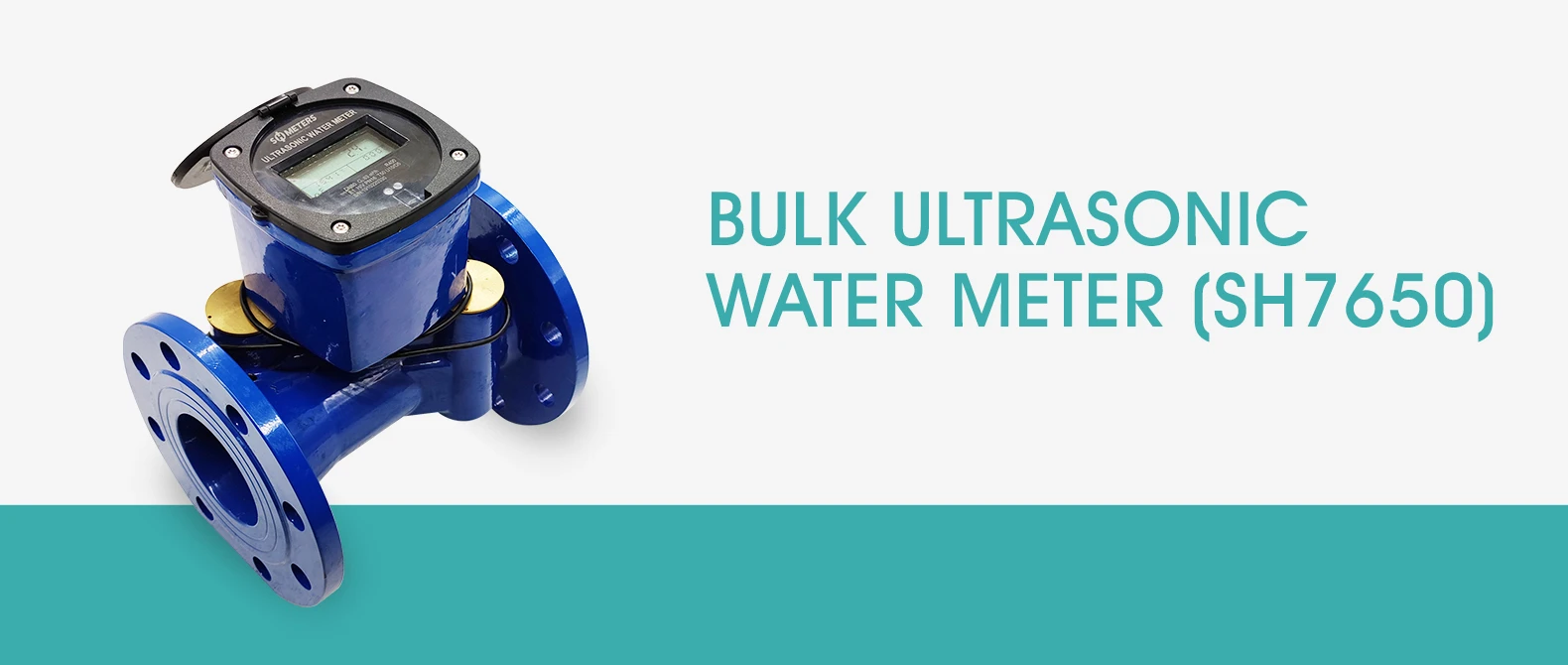
Ultrasonic flow detection technology has emerged as a transformative approach in fluid measurement, offering a non-intrusive, highly accurate alternative to traditional mechanical and electromagnetic flowmeters. Unlike conventional methods that rely on moving parts or electrical conductivity, ultrasonic technology measures flow velocity by analyzing the propagation characteristics of sound waves through a fluid medium. This fundamental difference enables previously challenging applications, such as large-diameter pipe metering, temporary installations, and measurement of fluids with varying compositions.
For water utilities and industrial operators, the technology addresses a critical pain point: achieving accurate, reliable flow data without the operational overhead of mechanical wear, pressure loss, or frequent maintenance.
2. How It Works: The Time-Difference Measurement Principle
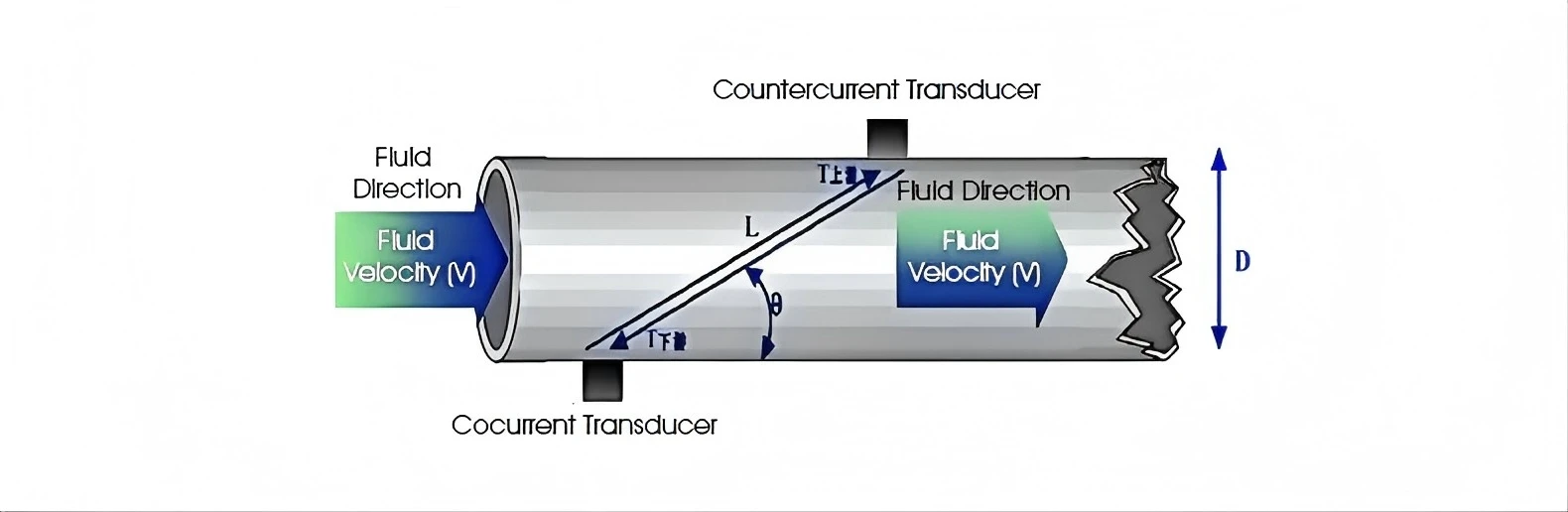
The most widely adopted method in modern ultrasonic flowmeters is the time-difference (or transit-time) technique. This principle relies on two ultrasonic transducers mounted on the pipe section, positioned upstream and downstream of each other. Each transducer alternately emits and receives ultrasonic signals that pass through the flowing fluid.
- Downstream signal: The ultrasonic pulse traveling in the direction of flow is accelerated, resulting in a shorter transit time.
- Upstream signal: The pulse traveling against the flow is decelerated, resulting in a longer transit time.
The meter's high-speed processor captures the precise time difference between these two signals-often measured in nanoseconds. Using the known pipe dimensions and the speed of sound in the fluid, the system calculates the average flow velocity. This velocity, combined with the pipe's cross-sectional area, yields the volumetric flow rate with exceptional accuracy.
Because the measurement is entirely acoustic, it is inherently independent of fluid conductivity, pressure, or viscosity, and requires no moving parts in the flow path.
3. Key Advantages Over Traditional Technologies
Compared to mechanical (e.g., turbine, single-jet, multi-jet, and Woltman) or electromagnetic meters, ultrasonic technology offers distinct operational and commercial benefits:
| Feature | Ultrasonic Flow Meter | Mechanical Flow Meter | Electromagnetic Flow Meter |
| Pressure Loss | None (no obstructions) | Moderate to high (due to moving parts) | Low (but requires conductive fluid) |
| Moving Parts | No | Yes (subject to wear) | No |
| Accuracy Over Time | Stable (no mechanical degradation) | Declines due to bearing/moving parts wear | Stable (no moving parts) |
| Bidirectional Measurement | Yes | Yes (with specific designs) | Yes |
| Fluid Conductivity Requirement | None | None | Required (fluid must be conductive) |
| Maintenance Requirements | Minimal (no moving parts to service) | Regular (due to wear and tear) | Minimal |
| Turndown Ratio (Q3/Q1) | Up to 400:1 or higher | Typically 160:1 to 200:1 | Up to 100:1 |
| Installation Constraints | Requires straight pipe runs | Requires straight pipe runs | Requires full-pipe; sensitive to air bubbles |
4. Key Takeaways for Operators:
- No Pressure Loss, Reduced Energy Costs: The unobstructed flow path eliminates the need to pump against additional resistance, directly reducing energy consumption in large-scale water distribution networks.
- Long-Term Accuracy: The absence of impellers, gears, or bearings eliminates the drift in accuracy that comes with mechanical wear, ensuring consistent measurement throughout the meter's lifecycle.
- Wide Turndown Ratio: A high turndown ratio (R400) means the meter can accurately measure both very low flows (e.g., 5L/h for leak detection) and peak demands, providing a single, reliable measurement solution.
- Low Maintenance: With no moving parts to clean, lubricate, or replace, operational costs are significantly reduced, making it ideal for remote or hard-to-access installations.
- Broad Fluid Compatibility: The technology works with a wide range of fluids, from clean water and wastewater to oils and slurries, as long as they can transmit ultrasonic signals.
5. Applications in Water Management and Industrial Settings
- Water Utilities and Municipal Water Supply
Ultrasonic meters are increasingly replacing mechanical meters in residential, commercial, and bulk water metering. Their ability to detect low flows (starting at 2 L/h or less) makes them valuable for leak detection and non-revenue water (NRW) reduction.
- Industrial Water Systems
Used in cooling water circuits, process water monitoring, and wastewater treatment. The non-invasive, no-moving-parts design ensures reliable operation in abrasive or chemically aggressive environments where mechanical meters would fail.
- Large-Diameter and Temporary Installations
Clamp-on ultrasonic meters enable flow measurement without cutting pipes or interrupting service, making them ideal for temporary surveys, verification of existing meters, or pipelines where flanged meters are impractical.
- Irrigation and Agriculture
Accurately measures water usage for billing and resource management in large-scale agricultural operations.
6. The Role of Ultrasonic Meters in Smart Water Networks
Modern water management relies on Advanced Metering Infrastructure (AMI) and Supervisory Control and Data Acquisition (SCADA) systems. These platforms require real-time, accurate data from the field, and ultrasonic meters are a critical data source.
7. Key Benefits for Smart Networks:
- Data Accuracy: Provides a reliable, repeatable measurement for billing, leak detection, and system balancing.
- Bidirectional Communication: Supports protocols likeWiFi, LoRa, GPRS, and RS485 Modbus for seamless integration with IoT platforms.
- Real-Time Monitoring: Enables utilities to detect anomalies (e.g., pipe bursts, unauthorized consumption) and respond proactively.
- Longevity: Extended battery life (up to 10+ years) and robust design (IP68) minimize field interventions and extend the useful life of the network infrastructure.

8. Conclusion: Why the Shift to Ultrasonic?
For water utilities, industrial plant managers, and system integrators, the decision to adopt ultrasonic flow detection technology is driven by a clear set of requirements: accuracy, reliability, low total cost of ownership, and adaptability to smart systems.
The technology offers a proven, field-validated alternative to traditional methods, supported by over a decade of deployment across 50+ countries. With certifications such as MID (BSI Class B), OIML R49, and STS, publicly verifiable in the EU NANDO database, ultrasonic meters meet the rigorous standards required for billing and regulatory compliance.