


Volumetric water meters are widely recognized for their accuracy and versatility in calculating water consumption based on volume changes. Unlike traditional velocity-based water meters, they can be applied across various water qualities and pressures. However, it is essential to understand the technical parameters, pricing, and selection precautions when choosing and using these meters to ensure their correct usage.

I. Dimensions and Features
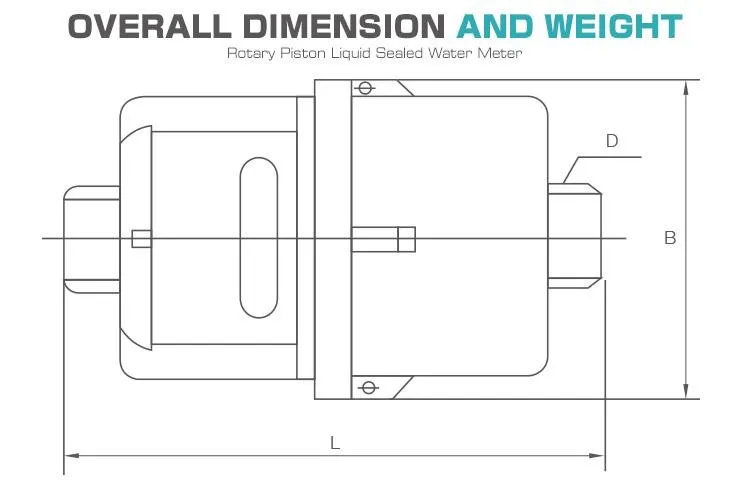
|
Description |
Unit |
Hydraulic Data And Dimensions |
|||||
|
Nominal Size |
mm(inch) |
DN15(1/2) |
DN20(3/4) |
DN(1) |
DN32(1-1/4) |
DN40(1-1/2) |
|
|
Q4 Error Limit ±2% |
m³/h |
3.125 |
5 |
7.875 |
12.5 |
20 |
|
|
Q3 Error Limit ±2% |
m³/h |
2.5 |
4.0 |
6.3 |
10 |
16 |
|
|
Q2 Error Limit ±2% |
l/h |
25 |
40 |
63 |
100 |
160 |
|
|
Q1 Error Limit ±5% |
l/h |
15.6 |
25 |
39.4 |
62.5 |
100 |
|
|
Min.Reading |
l |
0.05 |
0.05 |
0.05 |
0.5 |
0.5 |
|
|
Max.Reading |
m³ |
9999.9999 |
9999.9999 |
9999.9999 |
99999.999 |
99999.999 |
|
|
MAP |
MPa |
1.6 |
1.6 |
1.6 |
1.6 |
1.6 |
|
|
Press Loss ΔP AT |
MPa |
≤0.063 |
≤0.063 |
≤0.063 |
≤0.063 |
≤0.063 |
|
|
L |
mm |
115 |
165 |
199 |
260 |
300 |
|
|
B |
mm |
43 |
43 |
53 |
60 |
77 |
|
|
weight
|
Without Connections |
Kg |
1.14 |
1.56 |
2.48 |
3.47 |
5.65 |
|
With Connections |
Kg |
0.97 |
1.3 |
2.05 |
2.75 |
4.7 |
|
|
Features |
Application |
|
1. Low start-up flow rate. 2. Volumetric rotary piston principle of measurement. 3. Accuracy is not affected wherever installed at a horizontal, vertical, or inclined pipeline. 4. Register is sealed with a special liquid to keep a clear reading in long-term service. 5. Mechanism use of high-quality materials to ensure a stable characteristic. 6. Accurate measurement with conformity to lSo 4064 class c. 7. On request, the series can be equipped with a remote transmission device. |
Measuring the volume of cold portable water passing through the pipeline.Also suitable for pure water. |
|
Warranty |
|
|
- Water temperature:0.1℃~50℃ for cold water meter. 0.1℃~90℃ for the hot water meter. Water pressure: ≤1.6Mpa (16 bar). |
|
|
Operating Condition |
|
|
-The Max.Admissible water pressure 1.6MPa. -Resisting water temperature: 50℃. |
II. Technical Parameters
The technical parameters of volumetric water meters primarily depend on the measurement range, accuracy, and other characteristics. Consider the following key parameters:
1. Measuring Range
Volumetric water meters typically offer a measurement range between 1 m³/h and 300 m³/h. This wide range caters to diverse water usage scenarios, including residential, industrial, commercial, and large-scale buildings.
2. Accuracy
The accuracy of volumetric water meters is typically classified between R160 and R200. This indicates that, under normal operating conditions, the meter's error range is approximately ±2% to ±5%. High-precision water meters are available with lower error ranges, reaching ±1% to ±2%.
3. Working Pressure
Volumetric water meters are designed to operate under working pressures below 1.6 MPa. If higher working pressures are required, specialized high-pressure water meters can be customized to meet specific user needs.
III. Precautions for Selection
Consider the following precautions when selecting and using volumetric water meters:
1. Model Selection
Choose the appropriate model of water meter based on your specific requirements. For small-scale household usage, a standard water meter is typically sufficient. However, for applications that demand high precision or high-pressure environments, it is advisable to opt for professional-grade water meters.
2. Installation
Water meters should be installed and calibrated by trained professionals. Improper installation or incorrect parameter settings can lead to inaccurate measurement data. Therefore, it is crucial to follow standardized installation procedures to ensure reliable readings.
3. Maintenance
Volumetric water meters are precision instruments that require regular inspection and maintenance. Additionally, measures should be taken to prevent damage caused by factors such as corrosive water quality or freezing conditions.
Volumetric water meters offer high precision and broad applicability, catering to various water usage scenarios. To ensure accurate measurement data and proper utilization, it is vital to consider the specific requirements and adhere to the precautions outlined above. Regular maintenance and adherence to recommended practices will contribute to the meters' longevity and reliability.
V. Working Principle
The working principle of the volumetric water meter is that under the action of water pressure, water enters the measurement chamber from the lower water inlet, and pushes the rotary piston to rotate around the central axis of the measurement chamber. The vacant space flows to the upper water outlet to be discharged. When the piston rotates, the rotating shaft and the shift fork are connected with the counting mechanism, so as long as the number of piston rotations is recorded, the volume flowing through the water meter can be calculated.
The most important product of volumetric water meters is rotary piston water meters. Rotary piston water meters are generally of small diameter, characterized by high measurement level (up to C level and D level), strong small flow measurement capability, and high sensitivity.
VI. Future Development
Volumetric water meters are designed to provide highly accurate and reliable measurements by precisely calculating the volume of water passing through them. By employing mechanisms like pistons, nutating discs, or oscillating pistons, these meters ensure precise monitoring of water usage, enabling efficient water management and billing systems.
Residential users stand to benefit greatly from the deployment of volumetric water meters. These devices provide homeowners with accurate measurements of their water consumption, empowering them to make informed decisions about their usage patterns. By being aware of their water consumption in real-time, residents can take proactive steps to conserve water, lower their bills, and contribute to sustainable water management.
Commercial and industrial entities also stand to gain from volumetric water meters. With precise measurements of water usage, businesses can optimize their operations, identify potential inefficiencies, and implement targeted conservation measures. This newfound insight into water consumption patterns can lead to significant cost savings and contribute to corporate sustainability goals.
Volumetric water meters play a crucial role in enhancing overall water resource management and sustainability. Their ability to detect leaks and abnormal consumption patterns allows utilities to swiftly identify and address water loss, minimizing wastage and ensuring the efficient use of water supplies.
By continuously monitoring water usage through volumetric water meters, utilities can detect even small leaks that may go unnoticed for extended periods. Timely detection and repair of leaks help prevent significant water losses, preserving this precious resource. Additionally, by identifying and rectifying anomalies in consumption patterns, such as sudden spikes or prolonged periods of high usage, utilities can mitigate excessive water consumption and encourage responsible usage practices.