


In This Post:
I. Why Is the EU Focusing on Digital Water Now? Three Key Drivers

I. Why Is the EU Focusing on Digital Water Now? Three Key Drivers
1. Water Scarcity Has Shifted from a Distant Concern to an Immediate Threat
Climate change, population growth, and accelerating urbanisation are rapidly depleting finite water resources. The International Water Management Institute projects that global water demand will exceed supply by 40% by 2030. In Europe, persistent drought in the south, falling groundwater levels, and reduced river flows are already impacting agriculture, industry, and daily life.
2. Aging Infrastructure and Network Losses Are Staggering
According to European Commission estimates, water loss rates across European distribution networks range from 8% to 57%. Many regions still rely on meter reading systems that are "obsolete for a decade," leaving utilities virtually blind to water distribution patterns and loss locations across their networks.
3. Technology Has Matured Enough to Make Transformation Feasible
Advances in IoT, artificial intelligence, and digital twins have moved digital water from concept to reality. AI-powered early warning systems with real-time monitoring can now pinpoint leak locations within hours or even minutes.
II. The Hard Numbers Behind Smart Water Meter Benefits
|
Technology
|
Water Savings Impact
|
|
Smart water meters
|
Up to 25% reduction in consumption
|
|
Digital management systems
|
Additional 5-8% savings
|
|
Leak detection technology
|
Further 7-14% reduction
|
Market data confirms the accelerating trend. The European smart water meter market was valued at approximately $2.2 billion in 2025 and is projected to reach $20.3 billion by 2035, representing a compound annual growth rate of 23.9%. In 2024, over 40% of European households had smart meters installed, with France and the Netherlands exceeding 80% coverage.
III. Why Smart Water Meters Are the Natural Entry Point for Digital Water
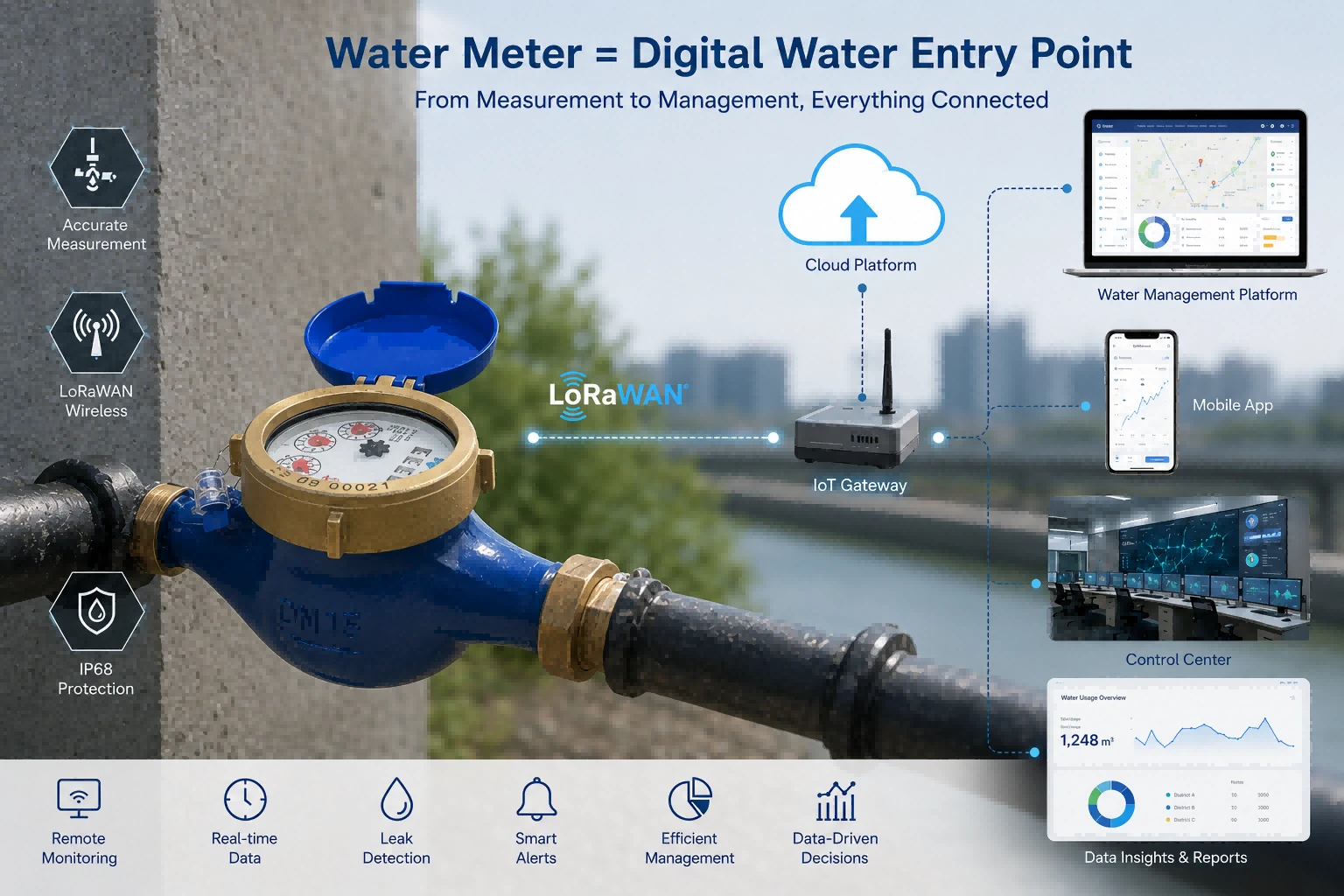
Water meters sit at the terminal point of distribution networks, directly connecting to households and businesses – making them the most widely distributed and comprehensive nodal devices in water systems. This "entry point" is being redefined across three dimensions.
Level 1: From Passive Billing to Active Management
Traditional mechanical meters only generate bills. They cannot help utilities understand consumption patterns or identify abnormal usage. Smart meters deliver near-real-time data, enabling utilities to monitor distribution patterns at any point and shift from reactive repair to proactive prevention.
Level 2: From Standalone Devices to Sensor Networks
When enough smart meters are deployed across a region, they form a distributed sensor network. By analysing data from neighbouring meters, systems can automatically detect anomalies; by comparing consumption patterns across time periods, they can identify equipment faults. An individual meter is a data point – networked meters are a data web.
Level 3: From Operational Tools to Strategic Infrastructure
Water has become as strategically important as energy and semiconductors. Semiconductor manufacturing requires ultrapure water, battery production needs substantial cooling water, data centres demand a continuous supply, and hydrogen electrolysis depends on water as a feedstock. Smart meters and digital water systems are becoming infrastructure that underpins industrial security and economic competitiveness.
IV. Traditional Operations vs. Digital Management: A Necessary Upgrade
|
Dimension
|
Traditional Operations
|
Digital Management
|
|
Data collection frequency
|
Quarterly/semi-annual readings
|
Real-time or near-real-time
|
|
Leak detection efficiency
|
Days to weeks to locate
|
Hours or minutes
|
|
Demand forecasting
|
Historical estimation
|
AI-driven predictive analytics
|
|
User engagement
|
Users receive bills only
|
Real-time consumption visibility
|
|
Non-revenue water
|
Typically 15-30%
|
Can be reduced below 10%
|
V. From "Metering" to "Solving": The Value Leap of Integrated Solutions
The true significance of water meters as an "entry point" lies in their ability to integrate into complete smart water solutions. Hardware is only the foundation – data analytics and integration with existing systems are where value is unlocked.
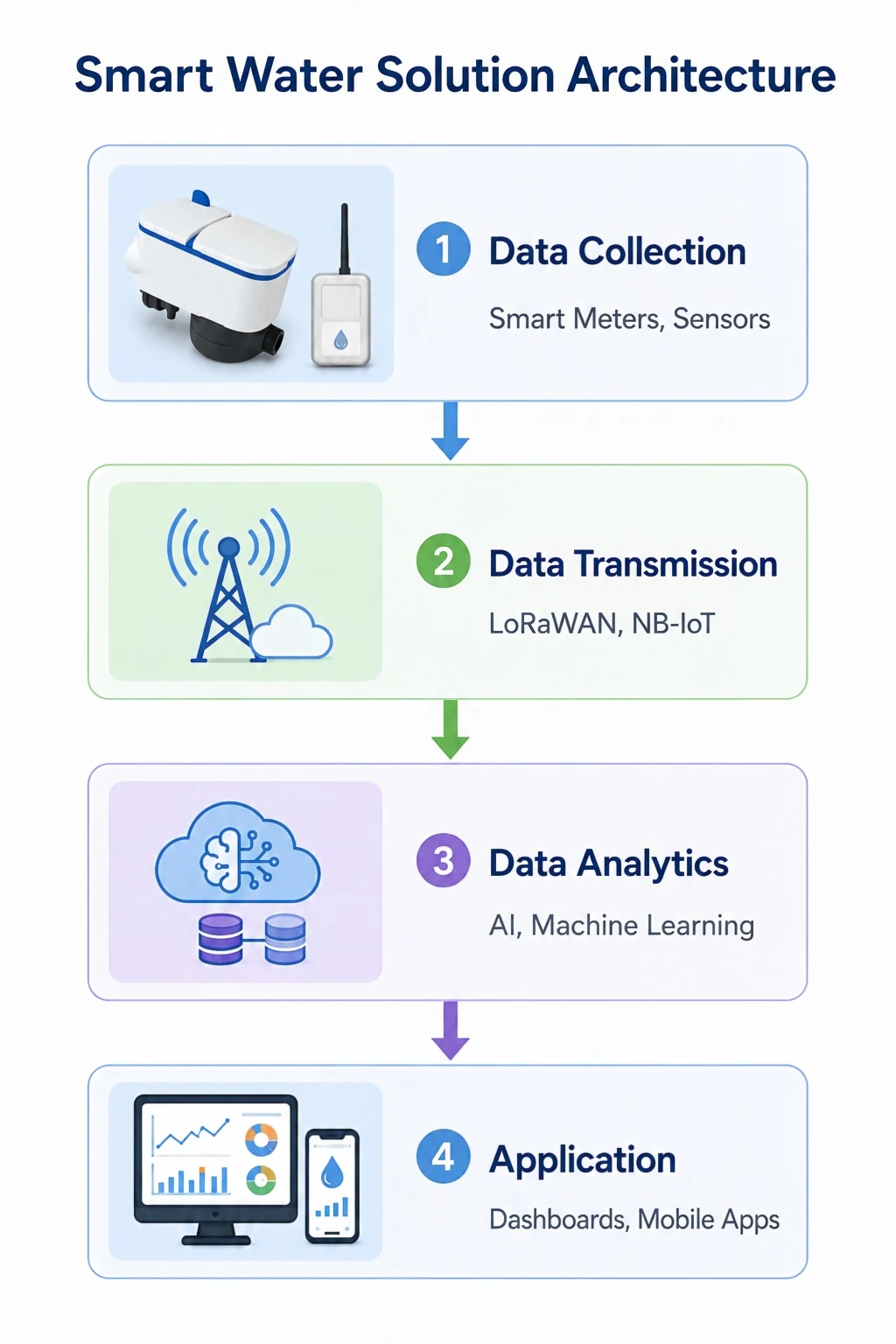
- Data collection layer: Smart meters, pressure sensors, and other terminal devices
- Data transmission layer: Secure data transfer via low-power wide-area networks such as LoRaWAN and NB-IoT
- Data analytics layer: AI and machine learning algorithms to identify consumption patterns, detect anomalies, and forecast demand
- Application service layer: Visual dashboards and decision-support tools for utilities, plus mobile applications for end-user water management
VI. Conclusion: From the "Last Mile" to the "First Node"
The EU's public consultation sends a clear signal to the global water industry: the strategic value of smart water meters as the digital entry point for water has gained recognition at the highest policy level.
If the water meter of the past was the "last mile" of the supply chain, today's smart water meter is becoming the "first node" of the digital water ecosystem. From this node, the data stream flows continuously across operations, management, planning, and decision-making.
S.H. Meters' product portfolio spans the complete spectrum – from mechanical meters to smart meters, from AMR/AMI systems to smart water platforms. Whether for traditional metering applications or smart water projects requiring remote reading, leak analysis, and demand forecasting, we deliver matched hardware and solutions.
To learn more about S.H. Meters' smart water solutions or to request a customised product proposal, please contact our technical team.
Related Products and Solutions: