


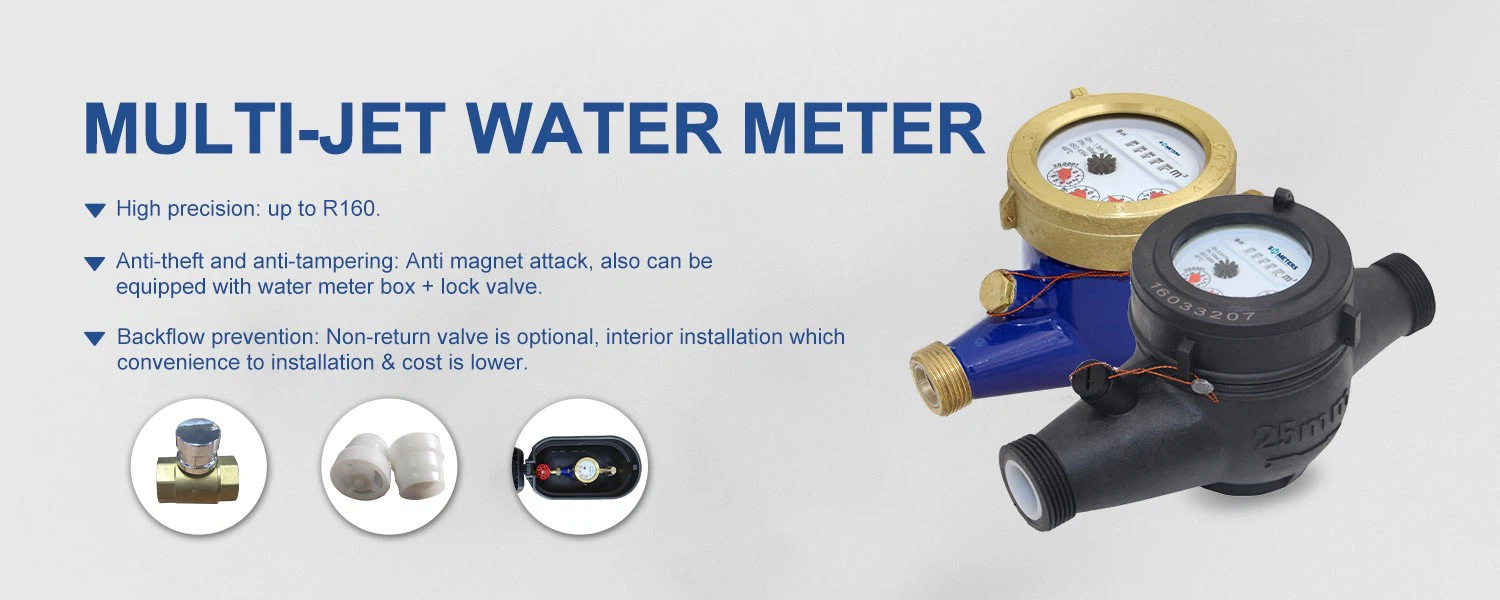
Flowmeters play a crucial role in various industrial processes by measuring the rate of fluid flow, aiding in process control, and ensuring efficient operations. Two common types of flowmeter setups are multiple flowmeters and single flowmeter systems. While both configurations serve the purpose of flow measurement, they differ significantly in terms of design, applications, accuracy, and cost.
- Design and Configuration: A multiple flowmeter setup involves the use of several individual flowmeters, each dedicated to measuring the flow rate of a specific fluid stream. These flowmeters can be identical or different types based on the fluid's properties. On the other hand, a single flowmeter configuration utilizes a single device to measure the total flow rate of a combined fluid stream. This setup may involve complex calculations to separate the individual flow rates.
- Applications: Multiple flowmeters are commonly employed in situations where distinct fluid streams need to be monitored independently. This is prevalent in applications where mixing ratios, such as in chemical blending processes, are critical. Single flowmeters are more suitable for scenarios where the combination of different fluid streams is acceptable, as in some general monitoring applications where exact proportions are not essential.
- Accuracy: The accuracy of flow measurement is a crucial consideration. In a multiple flowmeter arrangement, each flowmeter measures a single fluid stream with high precision. However, errors can accumulate due to calibration differences among individual flowmeters. Single flowmeters, if properly calibrated and programmed, can provide accurate measurements of the combined flow rate. However, inaccuracies may arise if there are fluctuations in the proportions of the different fluids.
- Cost and Complexity: Multiple flowmeter systems can be more expensive due to the cost of multiple devices, installation, and maintenance. Each flowmeter requires its own calibration and upkeep. Single flowmeter systems are often more cost-effective since they involve a single device and reduced installation complexity. However, the complexity of accurate measurement calculations might increase, potentially offsetting the initial cost savings.
- Maintenance and Calibration: Maintaining and calibrating multiple flowmeters can be labor-intensive and time-consuming. Each device must be individually calibrated and checked, leading to higher maintenance costs. Single flowmeters are generally easier to maintain and calibrate due to their singular nature.
- Redundancy and Reliability: Multiple flowmeters offer a degree of redundancy. If one flowmeter fails, the others can still provide data for functioning streams. Single flowmeters lack this redundancy, and a failure could result in the loss of all flow data.
In conclusion, the choice between multiple flowmeters and a single flowmeter depends on the specific requirements of the application. While multiple flowmeters excel in precision and independent monitoring, single flowmeters offer simplicity and cost savings. It's essential to consider factors like accuracy, application complexity, maintenance costs, and redundancy when making this decision.