


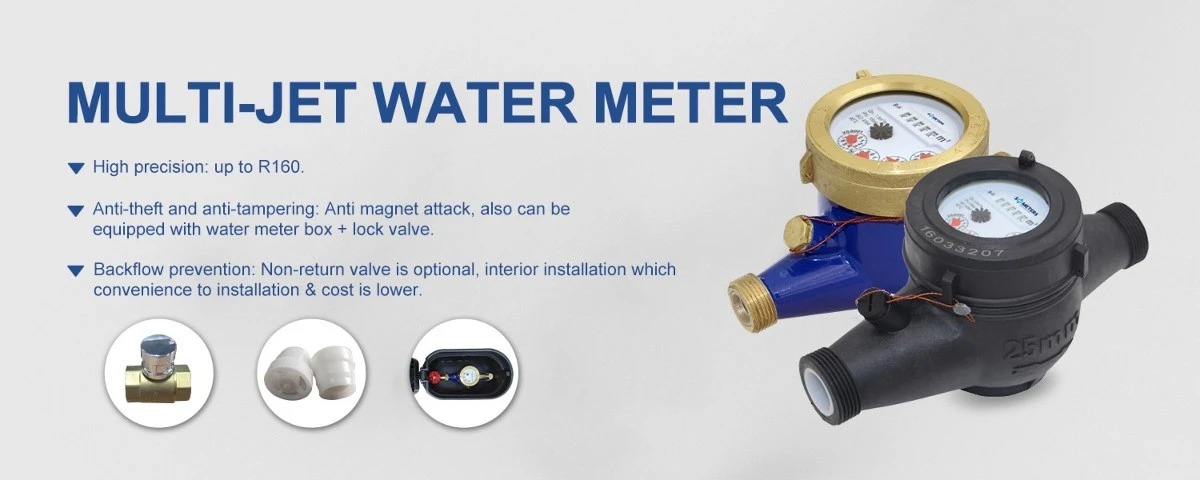
Water meters are devices used to measure the volume of water flowing through a pipe. They are an important part of water supply systems, as they allow water utilities to track water usage and bill customers accordingly.
For water supply companies, water meters are not only an important instrument for correct measurement and rational distribution of water resources but also an important basis for water supply companies to charge water fees. Therefore, the water meter measurement management level of water supply companies is directly related to the economic interests of water supply companies and users, is an important "link" between water supply companies and users.
1. Classification of Water Meters
Classified by Working Principle
(1) Speed type water meter: rotor type water meter, spiral wing type water meter.
(2) Volumetric water meter
Classified by Accuracy Level
A-level form, B-level form, C-level form, D-level form
Classified by Nominal Diameter
(1) Small-diameter water meters: water meters with a nominal diameter of 40mm or less
(2) Large-diameter water meters: water meters with a nominal diameter of 50mm and above
Classified by Purpose
Divided into civil water meters and industrial water meters.
According to the Installation Direction
Divided into horizontal and vertical installation water meters (also known as vertical meters).
According to Working Pressure
Divided into ordinary water meters and high-pressure water meters.
Press the counter to see if it is submerged in water
(1) wet water meter
(2) Dry water meter
(3) Liquid-sealed water meter
In the Form of Counter Indication
Divided into a pointer type, word wheel type, and pointer word wheel combination.
According to the number of water jets driving the impeller
(1) Multi-stream water meter
(2) Single stream water meter
2. The working principle and current situation of the water meter
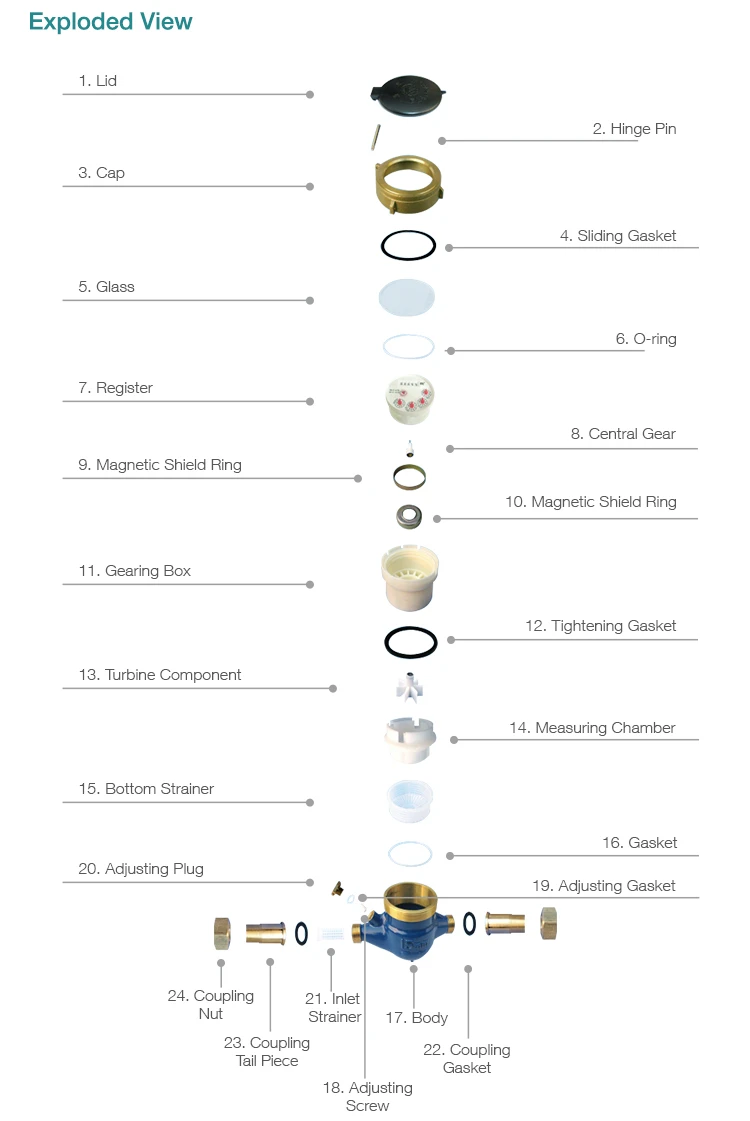
(1) Multi-jet water meter
When the water flows through the water meter, many beams (strands) of water flowing from around the impeller box, driving the impeller to rotate.
The nominal diameter of this water meter is generally 15mm to 50mm.
After the water flow hits the impeller, the impeller starts to rotate, and the counting mechanism accumulates the number of turns. The record shows the amount of water passing through the water meter. It is customary to turn the first red pointer of the water meter to the ratio of the number of revolutions of the impeller, called the reduction ratio of the water meter.
(2)Single Jet water meter
When water flows through the water meter, only one beam (strand) of water flows to drive the impeller to rotate.
The nominal diameter of the single-flow water meter is generally 15mm to 25mm, and the volume is small.
Smart water meters are becoming increasingly popular and can be categorized into remote water meters, prepaid water meters, and electromagnetic and ultrasonic water \ meters. Remote water meters can transmit readings wirelessly or through wired connections, while prepaid water meters use IC cards or code tables to monitor water consumption. Electromagnetic and ultrasonic water meters use electronic sensors to measure water flow and are often used in industrial settings.
Some additional details about the different types of water meters:
Rotary piston water meters are the most common type of water meter. They are accurate, reliable, and relatively inexpensive. However, they can be more difficult to install than other types of water meters.
Electromagnetic flowmeters are more accurate than rotary piston meters. They are also more expensive and can be more difficult to install. However, they are a good choice for applications where high accuracy is required.
Ultrasonic water meters are the most accurate type of water meter. They are also more expensive and can be more difficult to install than other types of water meters. However, they are a good choice for applications where very high accuracy is required.
How does choosing the right water meter?
Consider the accuracy requirements of your application.
Consider the nominal diameter of the pipe that the meter will be installed in.
Consider the purpose of the water meter (civil or industrial).
Consider the cost of the water meter.
Consider the ease of installation of the water meter.
Some tips for maintaining water meters:
Have your water meter regularly inspected and tested by a qualified technician.
Keep the area around the water meter clean and free of debris.
Do not tamper with the water meter.
Report any problems with the water meter to your water utility immediately.
In summary, water meters are crucial instruments for measuring, distributing, and billing water resources. They come in different types and classifications, each suited for different purposes and settings. Smart water meters are also becoming more popular due to their efficiency and accuracy in monitoring water consumption.