


Remote transmission water meter:
The remote transmission meter reading water meter is divided into wired remote transmission and wireless remote transmission, and the wired remote transmission water meter can be divided into a split-line remote transmission water meter and a bus system remote transmission water meter.
1. Split-line remote water meter:
①Introduction: The split-line water meter is an early product of wired remote water meter, which can realize remote meter reading, remote diagnosis and other functions. The water meter in this kind of system is based on the ordinary water meter with the addition of a signaling device. Each water meter has a signal line connected to the data collector. The collector collects data through this line, and then performs data processing, storage, and fault recording.
②Product analysis:
Advantages: Since multiple meters share one collector, the cost per household is lower.
Disadvantages: a. Since each signaling water meter needs to lead the signal line to the collector, each lead must also correspond to the terminal on the collector, the circuit is complicated, the wiring construction is complicated, not only the workload is large, but also the installation error is very easy to occur. b. The sending table only sends signals to the concentrator in a one-way signalling way, without interactive verification process, and the data is extremely unreliable. Because the transmission is an analog signal, it is very susceptible to external interference. c. Since the collector manages all users, once a fault occurs, all the water meters connected to it will be out of control, and the safety is very poor.
③ Application: This method can be mainly used in places where the water meters are out of the house and the water meters are concentrated together. However, due to the use of one meter and one line method for this type of water meter, the construction is difficult, the maintenance is difficult, the meter information is easily disturbed, and there is an error between the data and the mechanical reading of the meter.
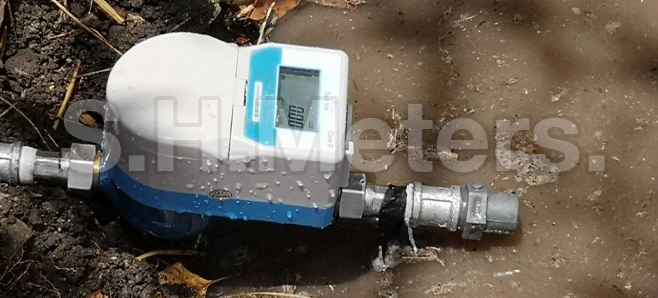
2. Bus system remote water meter:
①Introduction: The bus-based remote water meter can realize remote meter reading, setting, diagnosis and other functions. The base table used is equipped with a control board, which can work independently and can perform basic work such as acquisition, storage, and transmission. If a valve-controlled water meter is used, functions such as remote control, stepped water price, and prepayment are also available.
②Product analysis:
Advantages: a. The installation is very convenient and not easy to make mistakes. One bus can connect the water meters of all the residents in the building, and the construction cost is lower than that of the split-line system. b. The data collector does not participate in the underlying data collection, only communicates, and the measurement is not affected by external factors. c. The on/off of the bus and the on/off of the lead wires of each household meter will not affect the data collection and storage of a single meter. Even if the reading cannot be read due to a line failure, as long as the line is reconnected, no settings are required. The real data can still be read out, and its security and stability are better.
Disadvantages: a. Since each water meter is equipped with a main control board, the price is higher. b. If the bus is occupied by a fault meter, it will affect the reading of all water meters on the bus, and the fault is difficult to eliminate.
③Application: With the deepening of China's reform and opening up and the continuous acceleration of urbanization, modern residential areas are also developing in the direction of high-grade and intelligent. 80% of the newly built residential areas in developed coastal areas have achieved intelligentization. property management. In the intelligent management of residences, the intelligent charging of residents' water, electricity and gas meters is one of the most important signs. The relatively mature bus-based remote centralized meter reading has become the first choice for intelligent water meters in intelligent communities. widely.