


Precautions for installation and maintenance of smart IC card water meters
The correct installation of the water meter is a necessary guarantee for accurate measurement. The installation of the water meter must consider safety, convenience and correct reliability.
The installation of the flow meter used to measure water can refer to its corresponding requirements.
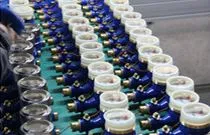


1. Security
(1) Before installing the water meter on the newly laid pipeline, the debris in the pipeline must be rinsed before installation, so as not to damage the water meter or affect the normal operation of the water meter after the water is passed.
(2) When installing the water meter, it must be considered that the water pressure and temperature used on site are both within the maximum operating pressure and maximum operating temperature of the water meter. When installing small-caliber civil water meters, you should also pay attention to whether the connection pipes and pipe nuts of the water meters feel particularly thin to avoid installing fake and inferior water meters.
(3) The water meter installed outdoors should generally be installed with a protective box, and should not be installed in an exposed or frozen place to prevent external damage. In severe winter, water meters installed outdoors should have anti-freezing measures.
Note: The water supply companies in the north (north of the Yangtze River) require that outdoor water meters are generally installed below the frozen soil layer and in pipeline wells. Indoor heating can ensure that indoor water meters are free from freezing and cracking, but the situation is better than in the south. (It is recommended that smart meters be installed on the ground and tube wells to ensure a strong guarantee for normal operation)
(4) Anti-theft should be considered, especially the copper case water meter.
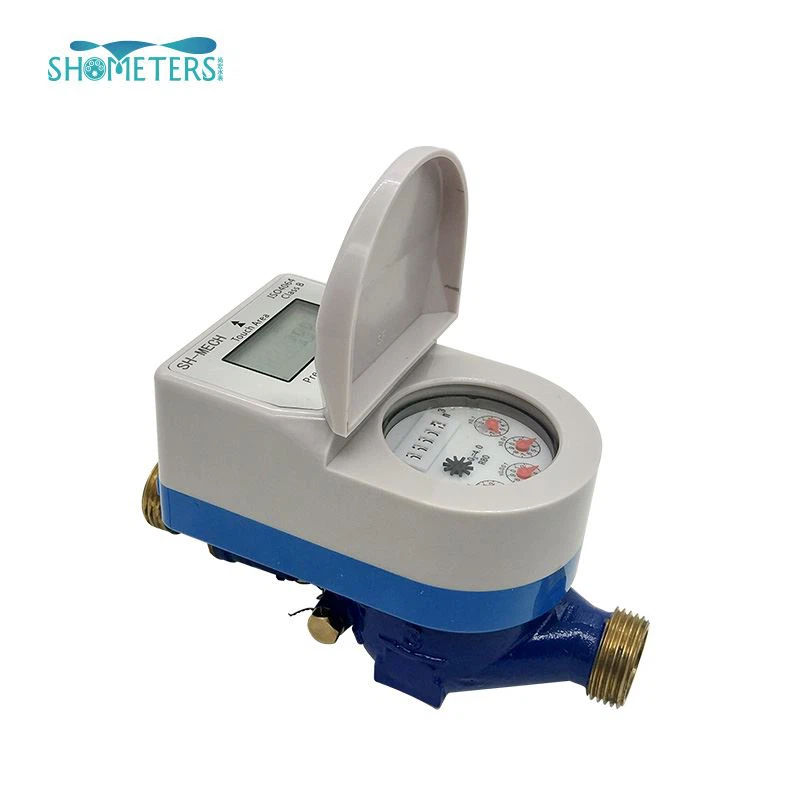
2. Location of the water meter:
Requirements for installation and use of water meters on the ground:
(1) The installation height of the water meter should be 0.8m to 1.2m above the ground or floor.
(2) The water supply pipes before and after the water meter must be fixed so that the water meter is always in a horizontal position to ensure accurate measurement and convenient and fast replacement of the meter.
(3) The magnetic locking valve must be installed in front of the water meter (in the direction of water supply). When the magnetic locking valve is installed, the red dot mark on the valve side faces the wall.
(4) Clear the house number or the left and right households (marked with red paint) at the three links of the riser.
(5) All pipe well locks in each building must be opened by a key.
Requirements for the installation and use of underground water meters:
(6) Two shut-off valves must be installed before and after the meter. The water flow area of the retractor (telescopic tube, filter tank, water filter net) installed at the front of the water meter inlet should be 1 to 2 times the diameter of the water meter to facilitate frequent inspection, replacement or cleaning.
(7) The surrounding area of the built water meter well should be closed and firm, the space in the well, and the depth of the well should meet the requirements of water meter replacement and water meter insulation, and the setting of the wellhead and step should meet the requirements of use.
(8) If the groundwater level is high, an anti-seepage meter well must be made in accordance with the norms and standards, and the installation height of the water meter should be above the ground
At 0.4m to 1m, the smart meter shall not be installed on the ground or buried in the soil. To
(9) The pipeline must be flushed before the water meter is installed. Otherwise, the water meter will not run or stop at a small flow rate due to the clogging of construction mud and sand, and the dial will not be clear, so free maintenance will not be provided. The pipeline layout in the well should be reasonable, and there should be no water for off-surface pipelines.
(10) The water meter installation must meet the technical requirements. Namely: small diameter water meters must have pipe joints and connecting nuts; for large diameter flange connection water meters, the water meter must be installed horizontally, and must not be installed upside down, skewed, or inclined.
(12) If solar concentrated water and industrial water meters are installed near the boiler, check valves should be installed behind the meters to prevent hot water from flowing back and damaging the water meter parts.
3. Convenience:
The location of the water meter should be as convenient as possible for reading and checking the meter, and the convenience of maintenance and meter replacement should also be considered.
(1) For the water meter installed outdoors, it should be very necessary to choose a location that is dry, sand-proof, groundwater-proof, and insect-proof.
(2) When the water meter is installed underground, in order to facilitate the replacement of the water meter, two shut-off valves must be installed at both ends of the water meter. The water flow area of the retractor (telescopic tube, filter tank, water filter net) installed at the front of the water meter inlet should be 1 to 2 times the diameter of the water meter to facilitate frequent inspection, replacement or cleaning.
4. Correctness:
The installation of the water meter must meet the requirements of its working method, and the installation position, the direction of the dial and the upstream and downstream straight pipe sections should be in line with the use of the water meter.
(1) Most water meters have installation method requirements. The h on the dial or nameplate stands for horizontal installation, v stands for vertical installation, and the absence of these two symbols means that it can be installed in any direction. The dial of the water meter should be upward and not inclined. The flow direction of the water meter should be consistent with the flow direction of the water in the pipeline. Some water meters (such as volumetric water meters, etc.) can be installed in any direction.
(2) The water meter should be installed so that the direction of the arrow on the watch case is consistent with the flow direction of the water in the pipe, and it should be installed coaxially with the pipe.
(3) The dial of a horizontally installed water meter generally faces upwards without tilting. The direction of the indicator dial of the reading water meter cannot be adjusted based on the convenience of reading. Note: Some dry water meter fishing reading indicators can be rotated 360' to facilitate reading. When the water meter is installed vertically or obliquely, the impeller shaft and the centerline of the pipe must be kept parallel.
(4) The straight pipe sections upstream and downstream of the water meter must meet the requirements of the instruction manual. This is especially important for speed water meters. Horizontal screw-wing water meters and single-stream water meters have special requirements for straight pipe sections. The downstream of the water meter should be higher than the water meter (such as a faucet) or maintain a certain pressure, so that the water meter always runs under the condition of a pipe full of water.
(5) There should be any pipeline position downstream of the water meter higher than that of the water meter to ensure that the water meter works under the condition of full pipe flow.