


How to Eliminate the Water Hammer Effect
Protective measures to eliminate or reduce water hammer
There are many protective measures for water hammer, but different measures should be taken according to the possible causes of water hammer.
1. Reducing the flow rate of the water pipeline can reduce the water hammer pressure to a certain extent, but it will increase the diameter of the water pipeline and increase the project investment. When arranging water pipelines, it should be considered to avoid hump or sudden changes in slope as much as possible
Reduce the length of the water pipeline, the longer the pipeline, the greater the water hammer value when the pump is stopped. Change from one pump station to two pump stations, and connect the two pump stations with suction wells.
The size of the water hammer when the pump is stopped is mainly related to the geometric head of the pump room. The higher the geometric head, the greater the water hammer value when the pump is stopped. Therefore, a reasonable pump head should be selected according to the actual local conditions.
After the pump is stopped in an accident, the pump should be restarted after the pipeline is filled with water after the check valve.
When starting the pump, do not fully open the pump outlet valve, otherwise there will be a great water shock. Major water hammer accidents in many pumping stations mostly occur in this situation.
Stop pump water hammer
The so-called stop pump water hammer refers to the hydraulic shock phenomenon that the pressure rises and falls in the water pump and the pressure pipeline due to the sudden change of the flow rate when the valve is opened and stopped due to a sudden power failure or other reasons. For example, the failure of the power system or electrical equipment, the occasional failure of the pump unit, etc., may cause the centrifugal pump to open the valve and stop, thereby causing the pump to stop and water hammer.
The maximum pressure of the water hammer when the pump is stopped can reach 200% of the normal working pressure, or even higher, which can cause the pipeline and equipment to be destroyed. General accidents cause "running water" and water stoppage; serious accidents cause the pump room to be flooded, equipment damaged, and facilities destroyed. damage, or even cause personal injury.
Setting up the water hammer elimination device
(1) Using constant voltage control technology
The PLC automatic control system is used to control the frequency conversion and speed regulation of the pump, and implement automatic control of the operation of the entire water supply pump room system. Since the pressure of the water supply pipe network changes continuously with the change of the working conditions, the phenomenon of low pressure or overpressure often occurs during the operation of the system, which is prone to water hammer, which leads to the damage to the pipeline and equipment. The PLC automatic control system is adopted. Pressure detection, feedback control of the start and stop of the water pump and speed adjustment, control of the flow rate, and then to maintain the pressure at a certain level, the water supply pressure of the pump can be set by controlling the microcomputer to maintain a constant pressure water supply, avoiding excessive pressure fluctuations, making The probability of water hammer is reduced.
(2) Install the water hammer eliminator
This equipment is mainly to prevent water hammer when the pump is stopped. It is generally installed near the pump outlet pipeline. It uses the pressure of the pipeline itself as the driving force to realize low-pressure automatic action, that is, when the pressure in the pipeline is lower than the set protection value, the water outlet will automatically open to drain the water. Pressure relief, in order to balance the pressure of local pipelines and prevent the impact of water hammer on equipment and pipelines. Generally, the eliminator can be divided into two types: mechanical and hydraulic. reset.
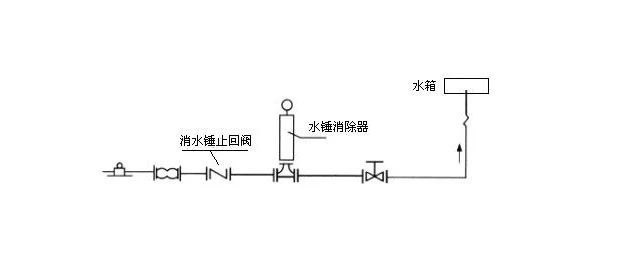
(3) Install a slow-closing check valve on the outlet pipe of the large-diameter water pump
It can effectively eliminate the water hammer when the pump is stopped, but due to the backflow of a certain amount of water when the valve moves, the suction well must have an overflow pipe. There are two types of slow closing check valves: heavy hammer type and energy storage type. This kind of valve can adjust the valve closing time within a certain range as needed (welcome attention: pump steward). Generally, the valve is closed by 70% to 80% within 3 to 7 s after the power failure, and the remaining 20% to 30% of the closing time is adjusted according to the conditions of the pump and pipeline, generally in the range of 10 to 30 s. It is worth noting that when there is a hump in the pipeline to bridge the water hammer, the effect of the slow closing check valve is very limited.
(4) Set up a one-way pressure regulating tower
It is built near the pumping station or at an appropriate location in the pipeline, and the height of the one-way surge tower is lower than the pipeline pressure there. When the pressure in the pipeline is lower than the water level in the tower, the pressure regulating tower will supply water to the pipeline to prevent the water column from breaking and bridging the water hammer. However, its depressurizing effect on water hammer other than pump-stop water hammer, such as valve-closing water hammer, is limited. In addition, the performance of the one-way valve used in the one-way pressure regulating tower must be absolutely reliable. Once the valve fails, it may cause a large water hammer.
(5) Set up a bypass pipe (valve) in the pump station